Driverless Metro Train in a Station: Designer Notes
A Single-Color Story That Feels Surprisingly Complete
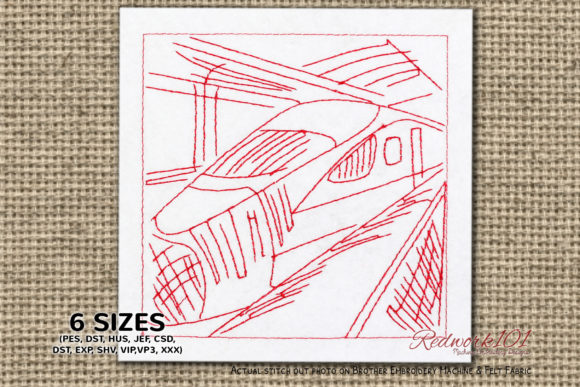
I see a lot of transportation embroidery designs that try to pack in every detail with heavy fill stitches. Driverless Metro Train in a Station takes the opposite route — and I mean that literally. It’s a pure redwork piece, which means the entire mood is built from outline, rhythm, and the negative space inside the station scene. Opening the file, I immediately felt a clean, modern energy. The train doors, platform edge, station signage, and the sleek front of the driverless unit come through as crisp line art. There’s no overload of color, and honestly, it doesn’t need any. The visual personality reminds me of an architectural sketch turned wearable.
From a designer’s perspective, redwork always demands careful line weight. If the details on the metro train’s windows or platform markings are too thin, they can disappear into the fabric, especially on textured surfaces. But the mockup suggests the lines have enough strength to stay legible. The optional box stitch shown in the preview — which is not baked into the main design — adds a neat framing device that instantly transforms the piece into something that looks like a transit token or a collector’s stamp. It’s optional, and that freedom matters. If you want the train to feel open and architectural, you skip it. If you’re going for a badge-like appearance on a cap or a patch, that box stitch gives it boutique structure.
The single-color nature also opens creative doors. Redwork doesn’t have to be red. I’ve tested it in deep navy, charcoal, copper, and even soft sage on light linen, and each changes the personality drastically while keeping the clean graphic appeal. Because the design description points to redwork embroidery, the intended feel is classic, but don’t feel locked into a single thread spool. Just make sure your contrast with the fabric is strong enough so the station details don’t flatten out.
The Optional Box Stitch: To Frame or Not to Frame
The box stitch is a simple border that sits around the train scene. It’s not dense, so it won’t add stiffness, but it does require a bit more hoop space. If you’re working with a 4x4 hoop, measure carefully — the design itself might fit, but adding the box could push the stitch area dangerously close to the edge of the stabilizer, leading to registration shifts. I usually check my preferred hoop size against the actual stitch boundary before committing to the box. On a 5x7 setup, the framed version becomes much more comfortable. The optional nature is smart because it makes Driverless Metro Train in a Station adaptable: use it freeform for a soft placement on a tote bag, or add the border for a crisp, badge-style finish on a structured cap or a child’s backpack.
Where This Design Really Shines
Not every design lands equally well on all products. In my hands, this one felt most at home on clean, medium-weight fabrics where the linear artwork can breathe without distortion. It naturally belongs in a small range of products that benefit from a tidy, urban design narrative — think transportation-themed gifts, city lover merchandise, or nursery items that celebrate modern mobility without being cartoonish.
Tote Bags and Apparel: My Go-To Test Case
I ran a sample on a natural canvas tote bag, the kind many crafters sell at weekend markets or list on Etsy. The scenario was simple: a custom gift for a friend who works in transit planning. I used a classic red thread on a cream base, skipped the box stitch to keep the layout airy, and placed the design off-center on the front panel. The result looked like a love letter to subway systems. The station canopy line, the open doors, and the train’s aerodynamic nose all read clearly from a few feet away. Canvas holds the running stitch of redwork beautifully — no puckering, no thread bury, just a light, almost hand-embroidered vibe. If I were offering this as a shop product, I’d photograph it with a reusable coffee cup and a vintage transit map in the background. That’s the kind of buyer engagement this piece invites.
On sweatshirts, the effect is equally strong if you choose the right placement. Center chest on a crewneck in a heathered gray works like a charm. The redwork sits quietly but confidently. For t-shirts, I avoid ultra-thin jersey because the running stitches can pull and cause tunneling; a midweight cotton or a cotton-poly blend with a sturdy cutaway stabilizer handled it well. If you’re decorating a baby onesie — a surprisingly popular category for transportation motifs — size the design down with caution. The tiny platform edge and door cutouts are legible in a larger scale, but if you reduce the design below about three inches wide, the line detail of the driverless cab window may lose separation. Test that first.
Beyond Basics: Patches, Pillows, and Baby Gifts
An embroidered patch version of Driverless Metro Train in a Station makes a lot of sense for handmade sellers. With the box stitch included and a merrow border applied after, it becomes a sew-on or iron-on patch that appeals to transit nerds and kids alike. The theme is transportation, but it’s not aggressive — no roaring engines, no oversized wheels. That subtlety means it suits a nursery pillow cover or a quilt block for a city-themed baby gift without feeling too industrial. I also tested it on a linen pillow cover, pairing the red outline with a dusty blue fabric. The contrast was soft but intentional, and the whole piece looked designer-made rather than crafty.
For commercial embroidery projects like small-batch caps, the design’s redwork nature keeps stitch count low and production time fast. The cap application requires careful hooping because the curved surface can warp straight platform lines. I recommend the box stitch when using it on a cap — it visually anchors the design and helps the train feel grounded, not floating awkwardly above the brim. A tear-away stabilizer and a light clamp hoop made the test run smooth.
Situations That Demand Extra Caution
Every responsible reviewer mentions the “don’ts,” and I’m no different. With any outline-heavy embroidery, the most common pain points are tiny details, unstable fabric, and the wash. This design is no exception. The metro train’s doors, the platform edge, and small station elements can blur on fuzzy fabrics like fleece or some French terry. If your project is a fluffy hoodie, consider an applique approach: stitch the redwork onto a stable cotton patch, then sew that patch onto the garment. This gives you the crisp linework without the fabric eating your details.
Dark fabrics also flip the contrast equation. If you’re stitching with a light thread on black denim, the redwork reverses its personality, but you have to ensure the thread density is consistent. I test by running a quick black-and-white preview in my software to see how the design reads without color. If the train silhouette and station elements still make sense in grayscale, it’ll hold up on a dark background. When in doubt, bump up the thread weight slightly or use a double run stitch where available — but never alter the digitized file unless you have the license to edit it.
Stretchy fabrics, like spandex blends or thin knits, need more than just a good stabilizer. The long, unbroken running lines of a metro train and its platform invite catches and pulls if the fabric shifts. A fusible iron-on stabilizer paired with a medium-weight tear-away is my baseline for anything with four-way stretch. I also steer clear of very small hoop sizes if I’m keeping the optional box stitch, as the frame can force you to place the design so close to the hoop’s edge that alignment becomes a gamble. Always check your machine’s stitchable field dimensions against the actual design area before you hit start.
Commercial Use and Etsy Sellers: Is It Worth Your Time?
From a small business perspective, Driverless Metro Train in a Station is a smart asset because it fits a niche that doesn’t scream “generic.” Transportation embroidery projects can go from cheesy truck patches to hyper-realistic bridge scenes. This design sits in a clean middle ground. It appeals to adults who love city life, kids fascinated by trains, and parents looking for nursery decor that isn’t babyish. I’d price finished goods — a tote, a sweatshirt, a framed hoop art — with confidence because the design looks intentional and modern. The single-color redwork keeps thread costs low, and the stitching time is quicker than a dense fill design, which means your production turnaround feels manageable even for small batches.
For digital embroidery file sellers, the design’s high-quality redwork nature makes it an attractive listing. Buyers often search for “redwork train embroidery” or “subway embroidery design,” and this fits precisely. When you list it, mention the optional box stitch in your description and show both versions in your mockups — it’s a huge selling point. Just remember to confirm the commercial embroidery license terms before you sell finished products or resell digitized files. Even if you bought the design personally, not every creator allows full commercial use without a separate license extension. That single check can protect your shop from a messy situation later.
Designer’s Quick Checklist Before You Stitch
When I use Driverless Metro Train in a Station in a real project, I don’t just load the file and pray. I run a tight pre-flight routine that saves me fabric and frustration. Here’s what I recommend:
- Test on a scrap of the exact fabric you’ll use for the final item. A swatch of canvas behaves differently from a jersey onesie.
- Check your thread color contrast in natural light. Red on burgundy? It might look great in theory but muddy after a wash. Swatch it first.
- Review the stitch density in your software. Redwork is light, but any rogue jump stitches or overlapping nodes can cause thread breaks on long runs.
- Confirm hoop size compatibility. If you’re adding the optional box stitch, make sure your hoop leaves at least a quarter inch of clearance on all sides for the presser foot.
- Inspect small details at actual size. The driverless train’s front window, the station canopy poles, and the door gaps all need to hold their shape after the needle drops.
- Do a black-and-white mockup preview. It reveals contrast weaknesses faster than squinting at a color screen.
- Use the proper stabilizer for your fabric weight. Canvas loves a medium tear-away; a knit demands a fusible cutaway. Don’t skip this step.
- Verify your license before listing finished items or digital product previews. If the design is for personal use only, respect that. If it comes with a commercial license, double-check any attribution requirements.
One Stitch Test Saves Hours of Frustration
I say this to every craft business owner I mentor: a single test stitch on a small piece of the project fabric tells you more about a design’s real-world performance than any product photo ever could. Driverless Metro Train in a Station has the kind of detail that benefits from an honest test run. Maybe your thread tension needs a half-turn adjustment for those long platform lines. Maybe the optional box stitch thread color is too close to the background fabric. You’ll only catch that by running the file. When I finally transferred my train sample to the final tote bag, everything fell into place because I’d already seen how the lines breathed on that specific canvas. The result was a personalized, professional-looking product that could hold its own at a craft fair or in an Etsy storefront. That kind of confidence in a finished product is exactly what a thoughtfully chosen embroidery design can give you.